The Age of AI Artisans: Creativity in the Hands of Machines
Hey there, tech tribe! Today, I want to chat about something that’s been simmering in the tech world, a brew that’s now reaching a boiling point: AI in creative arts. It’s not just transforming the way artists work but also redefining what we consider art. Many of us have been curious—or even a little skeptical—about computers stepping into the shoes of the Picasso and the Van Gogh. So let’s dig into this and see how deep this rabbit hole goes.
A Stroll Down Digital Lane
I remember back in the good old days—I mean like, two years ago—when AI was mostly about beating human champions at chess and Go. I never thought that it would take a bite out of the art world pie. But here we are, watching AI create paintings that actually make you feel something, writing poetry that rhymes and hits you in the gut, and even composing music that could make Mozart do a double-take.
Companies like OpenAI and DeepMind are developing neural networks that don’t just copy human-created art but come up with stuff that feels genuinely unique. AI is like that mysterious artist who knows all the coolest art galleries in town and can out-imagine many human artists. Talk about intimidating!
AI Brushes and Virtual Canvases
The breakthrough isn’t just the creation of art. It’s also the tools that help in the process. AI-powered platforms like Midjourney and DeepArt let anyone with decent internet create impressive art pieces with a few clicks. It’s like giving everyone their own virtual studio complete with personal AI art assistants.
Imagine telling an AI, “Hey, I’m feeling kind of blue,” and watching it whip up a masterpiece that captures your emotion, mixing colors and brushstrokes that nail the perfect mood. It really is magical. Now, even non-artists can express themselves without worrying about their lack of traditional skills. This is what democratizing art looks like!
Creativity: Exclusively Human, or Nah?
This brings us to the hot topic: Can machines truly be creative, or are they just copying what we’ve done in the past? This is where things get spicy. Creativity has always been the sacred territory of the human mind—our ability to think outside the box, find inspiration, and turn imagination into reality.
I think it lands somewhere in between. AI can collect and analyze massive datasets of art styles and techniques, then produce something unexpected. It’s like fishing for pearls in an ocean of artistic history, stringing them together to form something sparkly and new. But while the process is fascinating, the spark of inspiration—the original idea—still feels very much like a human thing.
The Skeptics and the Cheering Squad
Of course, there’s ongoing debate. Some purists argue that AI art lacks the emotional depth and soul that comes from a human artist’s lived experience. They’re not wrong. Emotion is hard to teach a machine. Think of it as asking your computer to feel the existential angst of a rainy Tuesday afternoon. Just doesn’t quite compute, right?
But then there’s the other camp cheering AI art on, looking at it as a collaboration tool. It’s like having a hyper-intelligent assistant who builds on your creative ideas, suggesting new directions you hadn’t thought of. Plus, it creates fantastic opportunities for inclusivity in arts. People with disabilities who might not be able to express themselves through traditional means can use AI to help communicate their stories.
Future Art or Skynet on Canvas?
So where do we go from here? In the next five to ten years, I see AI becoming an ever-present force in the creative industries. Movie directors will use algorithms to storyboard, authors will consult smart script-writing AIs, and museums might have galleries entirely crafted by AI artists. We’ll likely see more hybrid projects where human intuition gets enhanced by AI’s limitless memory and processing power.
But will AI become the next big artist? I’m not so sure. There will always be something special about human-created art, that undefinable, messy beauty of imperfection and personal touch that a stream of zeroes and ones just can’t replicate. Honestly, I’m excited to see this marriage of human and machine art develop because we’re still in the early stages, and who knows what wonders lie ahead.
Conclusion: Embrace the Paintbrush of Tomorrow
So here we are. The art world has changed forever, and while there’s some nervousness in the air, there’s equal excitement about what’s possible. AI isn’t replacing artists but expanding the toolbox, empowering more people to jump into creativity without hesitation. It’s a wild time to be alive, and I honestly can’t wait to see what the AI-art revolution brings next.
Keep imagining, keep creating, and let technology light your way!

The Unending Exodus: Displacement and the Future of Assyrian Communities
The Challenge of Preserving the Syriac Language: A Legal and Political Ledger
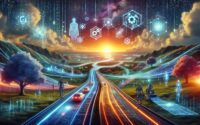
Exploring the Frontiers of Artificial Intelligence: A Journey into AI-Powered Creativity
About Author
