The 2026 Midterm Map Is Already Being Drawn — Here’s What Redistricting Fights Mean for Your District
Why This Moment Matters More Than You Think
We’re two years out from the 2026 midterms, and the real battle isn’t happening on campaign trails yet. It’s happening in courtrooms, state legislatures, and obscure redistricting commissions across the country. The maps being drawn right now will determine which party controls Congress for the next decade. That’s not hyperbole. That’s civics.

Here’s the thing about redistricting: it’s the kind of process that puts most people to sleep. Maps, districts, partisan calculations. Sounds boring, right? But this is where power actually gets concentrated or dispersed. This is where your vote either counts for something or gets mathematically swallowed up. Understanding what’s happening now means you can actually do something about it before Election Day arrives.
The Playing Field: Why Republicans Are Nervous
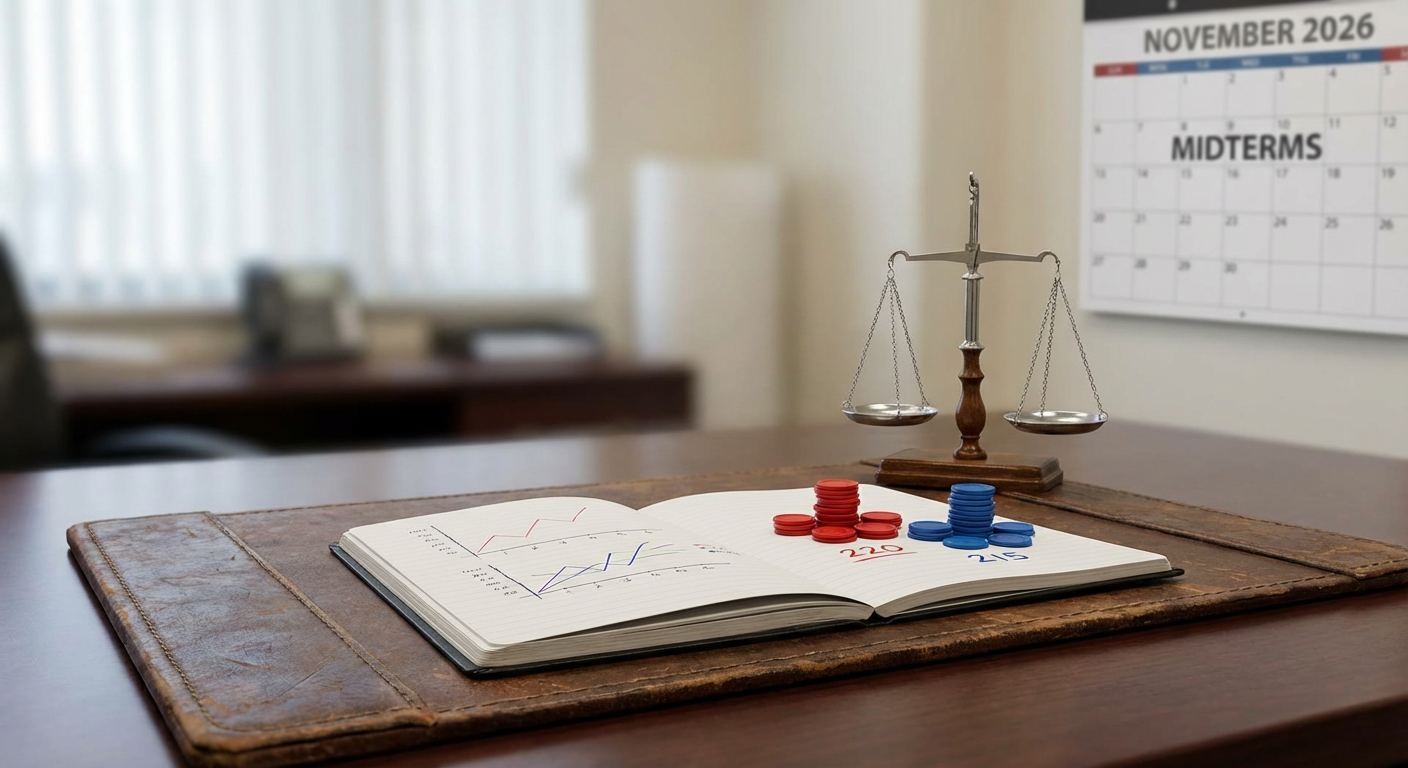
Republicans currently hold a 220-215 House majority heading into 2026. That’s one of the thinnest margins in modern history. Flip just three seats and control changes hands. That razor-thin advantage is why redistricting has become an existential issue for the GOP.
Add in the historical pattern: the president’s party typically loses around 28 House seats during midterm elections in a first term. That’s not a prediction. That’s data. It happens across administrations, across decades. It’s baked into how voters respond to the sitting president’s second year in office. So Republicans know they’re not just fighting to keep seats. They’re fighting against gravity.
The Cook Political Report 2026 House Race Ratings identified 34 House seats as competitive toss-ups or leaning toward a flip as of early 2026. Thirty-four. That’s nearly 8 percent of all House districts where the outcome is genuinely uncertain. In a landscape this volatile, redistricting becomes the mechanism for trying to engineer certainty.
The Current Fights: Where the Action Is
North Carolina is the clearest example of redistricting intensity right now. The state’s court-ordered redistricting fight, still active in early 2026, could affect up to 4 congressional seats. Four seats might not sound like much until you remember that Republicans’ margin of control is five seats. North Carolina alone could flip the entire chamber. That’s why both parties have legal teams deployed there like it’s a war zone.
Then there’s New York, where Democrats passed an aggressive gerrymander in 2023 that state courts ultimately upheld. That map could net Democrats 2 to 3 additional seats in 2026. Democrats are playing the same game Republicans perfected over the last decade, using redistricting as a tool to manufacture advantage.
This is the uncomfortable truth about redistricting: both parties do it. Both parties are doing it right now. The question isn’t whether partisan mapmaking is happening. The question is whether you know where it’s happening in your state and whether you’re paying attention to who’s drawing the lines.
How to Actually Track What’s Happening in Your District
You don’t need to become a mapmaking expert. You need two things: awareness and the right resources. Start with the Brennan Center for Justice Redistricting Tracker. It’s comprehensive, updated regularly, and shows you which states have active redistricting fights and what stage they’re in.
Next, find your state’s redistricting commission or legislature website. This varies by state. Some states have independent commissions. Some have legislatures drawing their own maps. Some have a mix. Spend 15 minutes figuring out who actually controls mapmaking in your state. That’s the person or body you need to be watching.
Then ask yourself three questions. First: does my state have a competitive House district? Second: what’s the current configuration of that district? Third: have there been any legal challenges to the current map? If you can answer those three questions, you’re already ahead of 90 percent of voters.
What You Can Actually Do About This
If redistricting battles are active in your state, the door is still open. Public comment periods, legal proceedings, legislative debates. These aren’t closed-door operations.
Show up to local government meetings. State legislative sessions aren’t held in secret. If your state is mid-redistricting fight, attend a hearing. Testify. Tell lawmakers what fair maps mean to you. Submit written comments. Most people assume they can’t influence these processes. They can. They just have to show up.
Support good-government organizations pushing for independent redistricting commissions. Some states have them. Most don’t yet. But the momentum is building. Californians, Michiganders, and others have passed ballot measures creating independent commissions. It’s possible. It’s happening.
And here’s the simplest thing: stay informed. Read local news about redistricting fights in your state. Follow state house reporters on social media. They cover this stuff constantly, and most people never see it. When people actually understand what’s at stake, they engage. They show up. They organize.
The maps being drawn right now will shape representation for ten years. That matters for your district and your voice in Congress. If you want to actually influence which candidates will represent you in 2026 and beyond, start paying attention to the maps now. This isn’t about picking a side. It’s about understanding the terrain. What questions do you have about redistricting in your state? Start digging. Democracy works better when people actually pay attention to how it works.

Why Your City Council Hears Everything Except What You Actually Said
Why Assyrian Autonomy in Iraq Is a Historical Right, Not a Political Favor
The Assyrian Autonomous Region: A Constitutional Right, Not a Political Favor
About Author
